Latest stories

  • Models & Products

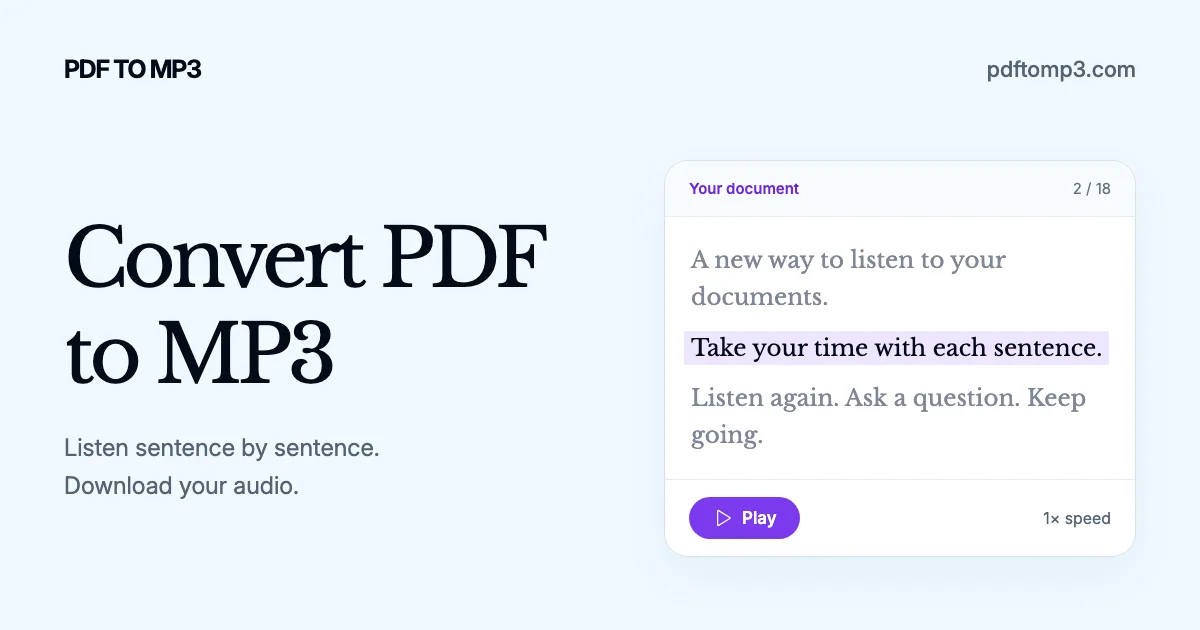
    Show HN: Use your OpenAI subscription to create audiobooks

    The MCP-based PDF-to-audiobook workflow is plausible, but its 'use your subscription' pitch is undercut by an API-key requirement and unresolved security and voice-rights concerns.

    Discussion summary

    One commenter compares pasting an OpenAI API key into someone else's web page to sharing credit-card details, framing it as a compromise risk.
    41 points26 comments
  • Industry & Society

    Were Software Engineers blue-collar workers all along?

    The post recasts software engineering as a skilled trade facing automation, but the discussion suggests the collar label matters less than capital ownership—and AI's actual labor impact remains contested.

    Discussion summary

    Replies question whether collar labels matter, arguing worker versus capital owner is more fundamental; some see divide-and-conquer, others warn of ideological collectivization.

    66 points99 comments
  • Research & Evaluation

    DishwasherBench – Can Frontier Models Stack a Dishwasher?

    DishwasherBench turns dishwasher loading into a verifiable benchmark for models and people, but its wash scoring is calibrated on one real test and remains unreliable for plates and cutlery.

    Discussion summary

    Commenters joke that matching a spouse's exacting dishwasher-loading standards is the harder benchmark, with poor 'wife mode' scores offered as evidence.

    46 points23 comments
  • Agents & Coding

    Show HN: An experimental pattern-first DAW that supports MCP

    Blokkily's pattern-first DAW and MCP agent control are technically ambitious, but the supplied discussion questions whether the README and frontend make the tool understandable or usable yet.

    Discussion summary

    The README is criticized for mixing high-level claims with internal technical details, making it hard to understand the product.

    52 points23 comments
  • Safety & Privacy

    AI models can provably hide arbitrary capabilities

    The paper shows encrypted computations can be hidden in model weights and resist common elicitation, but the discussion questions whether that is a practical threat or a narrow, detectable demo.

    Discussion summary

    The core security worry is that arbitrary strings could activate hidden capabilities, especially in open-weight models, and that reverse-engineering or obfuscating triggers remains unresolved.

    189 points103 comments
  • Research & Evaluation

    Auto Research: Integer multiplication below n log n

    The page pitches an autonomous research run to improve integer-multiplication exponents, while the discussion questions whether gains reflect genuine progress or cost-model accounting.

    Discussion summary

    Blum's speedup theorem allows time improvements via huge lookup tables; a reply questions whether arbitrary-size integers permit a finite lookup table without computing it.

    54 points22 comments
  • Infrastructure & Efficiency

    Janas: Run LLMs larger than RAM by streaming experts from SSD

    Janas-LLM reports streaming 48 GB MoE models from NVMe on a 32 GB laptop at 24 tok/s, far above llama.cpp in its tests, but the project is an untested experiment and the supplied discussion questions agentic and virtual-

    Discussion summary

    A commenter sees open weights and open-source tooling as a source of hope, arguing that the proliferation of such projects signals the start of normalizing openly available, non-monopoly AI tools.

    123 points37 comments
  • Industry & Society

    Epic Games tells employees to use AI to get Disney game done

    Epic's AI-first mandate for its delayed Disney game follows layoffs and staff surprise; a small HN sample is split between calling AI coding normal and warning it will degrade game and art quality.

    Discussion summary

    Replies argue AI-assisted coding is already standard in large tech firms, with developers steering agents and reviewing diffs rather than writing code by hand.

    61 points36 comments
  • Industry & Society

    AI is a tool and using it well takes skill

    The article argues LLMs are tools whose value depends on skilled use, not automation; the lone comment adds that prompting skills shift quickly, so today's advantage may not last.

    Discussion summary

    jgord warns that rapid LLM adoption may cause a decades-long dip in human cognitive ability and education, comparing it to smartphones and social media.

    58 points34 comments
  • Industry & Society

    Kevin Kelly's 2016 AI Predictions, 10 Years Later

    Kevin Kelly's 2016 forecasts—Google as AI-first, cloud-AI oligopoly, narrow specialists—look partly prescient, but the sparse discussion notes Google still earns from ads and adoption, not capability, often decides out

    Discussion summary

    stephen_cagle gives an arbitrary 8/16 hit rate for AI predictions and questions the 'inevitable' framing; naasking replies that 50% is no better than a coin flip for 'will AI do X by 2026?'

    95 points23 comments
  • Industry & Society

    Just say no to OpenAI and Anthropic

    The article argues open-weight models and private inference can replace OpenAI and Anthropic, but commenters dispute its privacy claims and moral framing, and self-hosting remains hardware-bound.

    Discussion summary

    Replies cite Google Vertex, Amazon Bedrock and Azure zero-data-retention options as counterexamples to the article's privacy claim.

    117 points64 comments