AlphaNIST
AlphaNIST applies AlphaZero-style reinforcement learning to simulated NIST assembly tasks, but the supplied discussion questions its name and notes the lack of real-hardware validation.
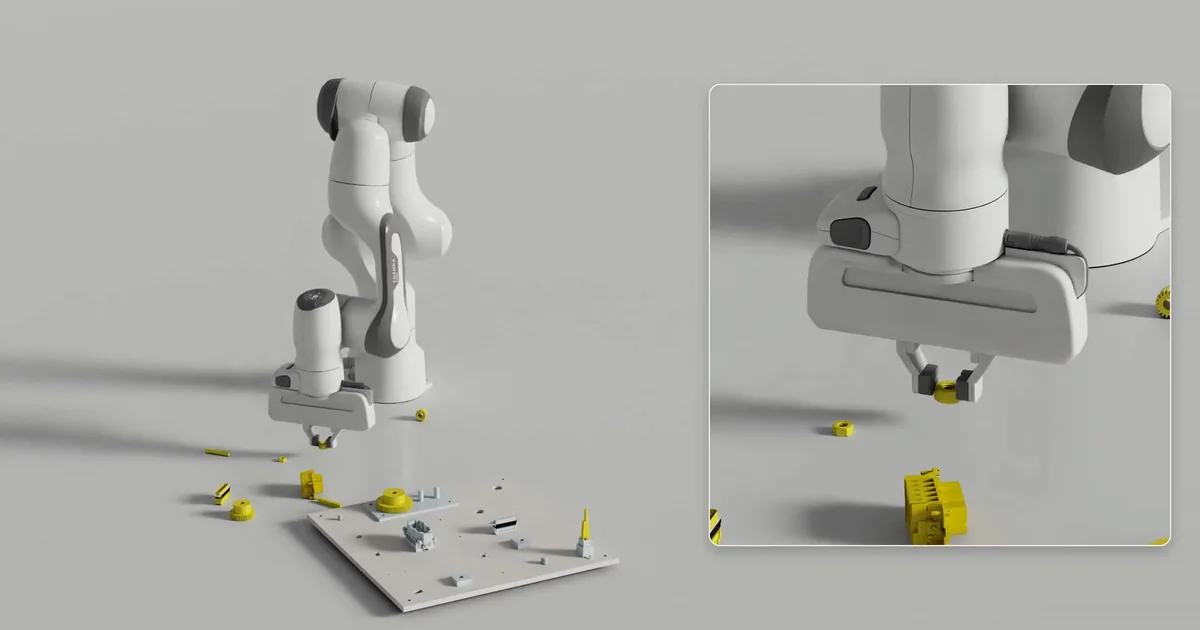
AlphaNIST is a project page for a reinforcement-learning method that trains a single end-to-end policy to perform contact-rich robotic assembly in simulation. Inspired by AlphaGo and AlphaZero, it uses only a binary task-success reward and trains across twenty heterogeneous NIST assembly tasks, starting from loose parts, in-hand grasps and cached partial assemblies.
The authors report that one policy beats twenty task-specific specialists and that adding reach or alignment rewards reduces success, while the robot discovers behaviors such as regrasping, using contact to rotate connectors and rolling nuts into place.
Key takeaways
- The NIST Assembly Task Board #1 contains twenty tasks with parts as small as 4 mm; tight clearances can cause jams or cross-threading.
- Training uses heterogeneous assets and initial states, including near-complete assemblies cached in simulation; the cache supplies starting states, not demonstrations.
- Success-guided beta sampling favors states the policy solves about half the time while still giving every state a chance.
- One policy trained across all twenty tasks reaches higher training success than twenty separate specialists; adding reach and alignment rewards reduces success in this experiment.
- The page highlights emergent assembly behaviors, including regrasping pegs, using board contact to turn a waterproof connector, and rolling an M12 nut onto a flat face.
- The work is presented in simulation; code and release are listed as forthcoming.
What people think
Analysis details
3 comments analyzed. Analyzed .
The sample selects active discussion branches and includes available parent comments. It may omit parts of the full thread. Selected themes do not measure community opinion or how common a view is.
Naming and provenance confusion
Commenters question what AlphaNIST is and criticize a name that suggests Alphabet/DeepMind or the NIST OCR dataset; an author says it is an homage to AlphaGo/AlphaZero.
Simulation-only validation
The author acknowledges no real-hardware transfer is shown yet and cites a separate CoRL paper as early evidence, leaving the sim-to-real claim outside this article.