FDA Moves to Let Organ Chips Stand In for Animal Tests
Regulators are opening the door to organ chips and computer models, but validation costs, proprietary data and scientific habit still keep animal tests the default.
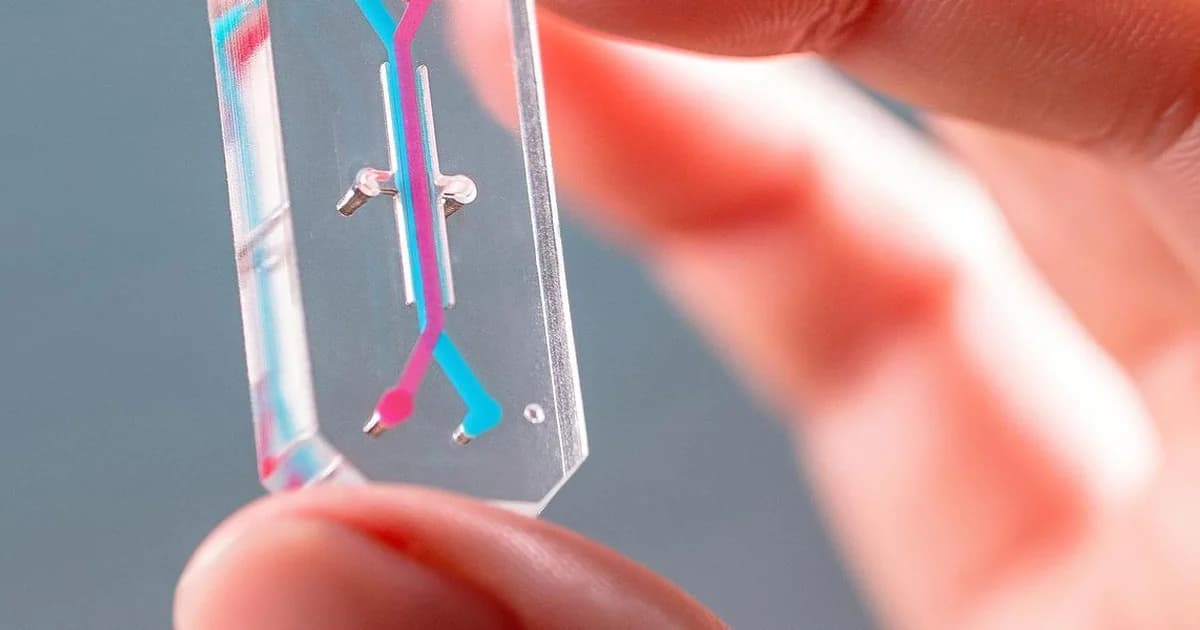
Regulators are beginning to let drug developers substitute human-cell systems, organ chips and computer models for animal tests. The FDA Modernization Act 2.0 authorized such nonanimal methods in preclinical studies in late 2022, and a September 2026 FDA rule would replace references to “animal tests” with the broader “nonclinical tests” if it takes effect.
The technologies include organoids, multi-organ chips and AI-driven simulations. In one Emulate study, a liver-on-a-chip flagged about seven of eight drugs that had passed animal trials but proved toxic to human livers.
Validation remains costly and fragmented, and adoption depends on policy, training and scientific culture.
The bits that matter
- The FDA Modernization Act 2.0, passed in late 2022, explicitly authorized nonanimal methods in preclinical studies. A September 2026 FDA rule would replace “animal tests” with “nonclinical tests” if it takes effect, while the NIH now asks animal-model grant applicants to include nonanimal research.
- Emulate’s liver-on-a-chip study required 870 chips and the labor equivalent of 16 full-time employees for 16 weeks. It correctly flagged about seven of every eight drugs that had passed animal trials but proved toxic to human livers.
- An Oxford University and Janssen Pharmaceutica team reported that computational simulations of human heart cells flagged compounds causing dangerous arrhythmia with 89 percent accuracy, compared with 75 percent for animal studies.
- Validation is fragmented: minute hydrogel variations alter growth patterns, research groups use different metrics for vascularized tumor chips, and comparable studies are needed for every NAM and every context. Small companies cannot afford the cost or time.
- Adoption faces institutional inertia. The monocyte activation test was developed in the mid-1990s but accepted by the European Pharmacopeia only in 2010, and rabbits remain widely used. NAM-only proposals are often seen as risky by funders and reviewers.
Discussion analysis
Analysis details
11 comments analyzed. Analyzed .
The sample selects active discussion branches and includes available parent comments. It may omit parts of the full thread. The analysis included 11 of 13 usable stored comments because of the input limit. Selected themes do not measure community opinion or how common a view is.
Tiered ethics for animal testing
A proposed tiered framework would avoid animals where possible, require reasonable confidence that harm will be minimal before in vivo work, and let test animals live natural lives, with humane euthanasia only for persistent suffering. The test is whether a researcher would accept the experiment in a voluntary human subject. The framework treats animal testing as a last resort rather than a default.
Human benefit versus animal lives
A counterargument asks why not use real organs in mice if that could cure an additional disease variant, framing the choice as human lives against animal lives. The reply values lab rats at zero when alternatives exist, leaving the moral tradeoff unresolved.
Animal research already carries welfare burdens
Real institutions already require researchers to justify animal use and meet quality-of-life standards, and the work is burdensome enough that it is avoided unless necessary. This challenges the premise that animal testing is an unregulated or cheap default. The point does not address whether the standards are sufficient, only that formal constraints and practical friction already exist.
Factory farming dominates animal suffering
Factory farming produces roughly 50 billion chickens and over a billion pigs annually under inhumane conditions, making test-animal suffering a small fraction of the total. Shared pain pathways mean intelligence is not the relevant criterion for moral concern. Incremental plant-based eating is offered as a more practical response than all-or-nothing veganism, though the comparison to 9/11 drew criticism as inflammatory.
DARPA already built organ-chip systems
A pointer to DARPA’s microphysiological systems program argues the core technology was figured out and built years ago. The implication is that current adoption debates may understate prior public research and that the remaining obstacles are regulatory and cultural rather than purely technical.
Cost alone should not justify animal tests
If animals are used mainly because they are cheaper and faster, that economic advantage should not be allowed to override the availability of alternatives. The argument ties adoption to pricing and speed rather than scientific necessity, and it treats cost as an insufficient ethical justification.