The RAM shortage is bringing back DDR4
RAM shortage is pushing Intel and AMD back to DDR4 support, with DDR5 kits costing over twice as much; the tradeoff is older memory’s lower speed and uncertain duration of the shortage.
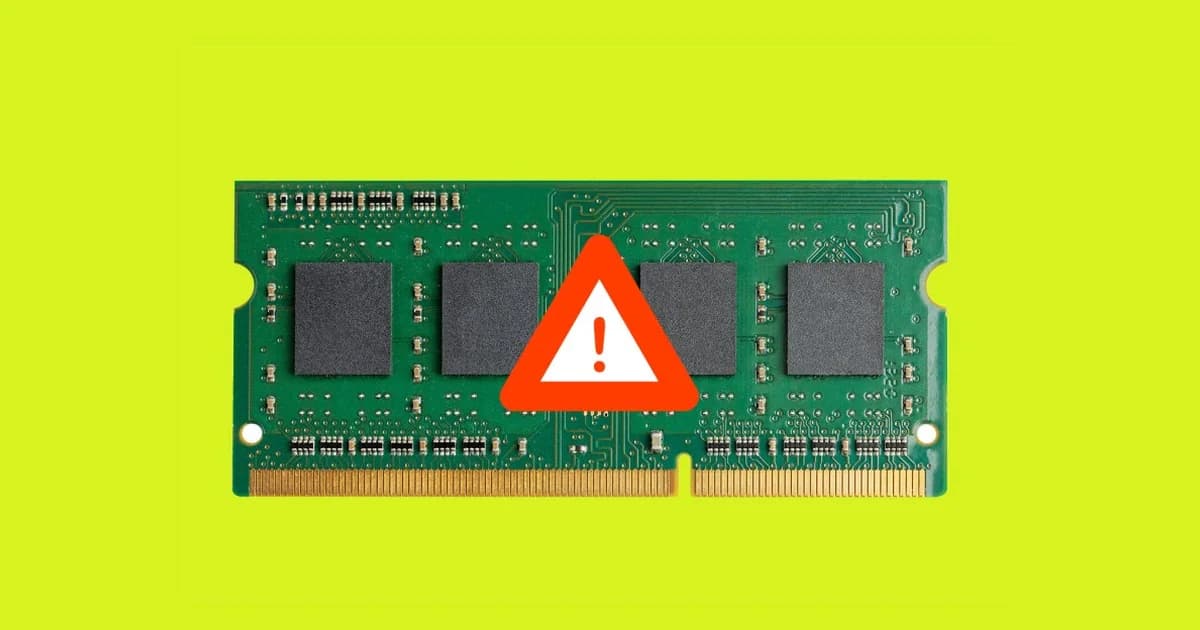
The Verge reports that the global RAM shortage is pushing Intel and AMD back toward DDR4 support, reversing recent DDR5-only platform strategies. Gigabyte has announced motherboards for upcoming Intel LGA 1700 chips expected in early 2027 and new AMD AM4 boards tied to a Ryzen 7 5800X3D relaunch.
The rationale is cost: DDR5 remains faster and more power-efficient, but a 32GB DDR5 kit can cost more than double a comparable DDR4 kit, so older memory may be the cheaper upgrade path for years.
Key takeaways
- Gigabyte says two motherboard lines will support upcoming Intel LGA 1700 processors, reviving dual DDR4/DDR5 support; the chips are expected in early 2027.
- Intel dropped LGA 1700 after 2024 for a DDR5-only approach, but the socket’s cross-compatibility with DDR4 is now an advantage amid memory price hikes.
- AMD is extending the older AM4 platform: Gigabyte announced new DDR4-compatible motherboards alongside a 10th-anniversary Ryzen 7 5800X3D relaunch.
- DDR4 launched in 2014 and is slower and less power-efficient than DDR5, but The Verge cites a 32GB Corsair Vengeance DDR5 kit at $620 versus $260 for DDR4.
- The article says it could be years before memory prices fall, making it sensible to keep existing DDR4 rather than upgrade.
What people think
Analysis details
24 comments analyzed. Analyzed .
The sample selects active discussion branches and includes available parent comments. It may omit parts of the full thread. The analysis included 24 of 38 usable stored comments because of the input limit. Selected themes do not measure community opinion or how common a view is.
AI hardware pricing and market control
Comments link high AI-era hardware prices to specialized DRAM fabrication and supply that takes years to expand, with producers pricing to what the market will pay. One reply argues supply-constrained markets let bidders set the price floor; another says the key issue is market competitiveness and large barriers to entry. CXMT's arrival at similar prices is cited against a simple price-fixing story. A separate reply reports plans to destroy decommissioned racks rather than resell to avoid flooding the market, framed as a profit-oriented disposal choice.
Disputed AI capacity utilization and overbuild risk
Replies dispute whether AI capacity is actually used today. One says the dot-com comparison differs because dark fiber sat unused until broadband, while AI capacity is used now; another cites GPUs sitting in warehouses due to missing prerequisites such as power. A third cites an article arguing an inevitable overbuild driven by speculative capital, circular financing, and depreciation/write-off risk. Another argues GPUs have intrinsic value unlike dot-com routers.
Reusing decommissioned enterprise hardware for budget builds
Comments describe Chinese X79/X99 boards and pulled Xeons/ECC DDR3/DDR4 from decommissioned servers used in Russian, Chinese and Southeast Asian communities for budget builds. Huananzhi EPYC boards around $350 boot Linux on second-hand EPYC 7002 CPUs, though fan-header control is limited. This hardware is often treated as e-waste in North America but squeezed for utility in emerging markets.
Energy prices and taxes for old-hardware builds
A reply speculates that countries using discarded enterprise silicon have sane energy prices compared with Western Europe. Others counter that energy is a commodity with similar underlying prices, while taxes differ, and cite EU/UK electricity rates around 27.5–29c/kWh plus fixed charges.
Repurposing old consumer devices for local AI and dashboards
A 10-year-old Kindle was reactivated as an AI story generator. Replies note LLMs make new hardware unaffordable while making old hardware usable again, with a cloud-tether caveat, and describe using old Kindles as locally generated smart paintings and Home Assistant dashboards.
Deindustrialization and dependence on Asian manufacturing
One reply frames rising device prices as a consequence of Western deindustrialization and dependence on Asian manufacturing, citing European refinery closures as an example of a pathological situation.