Latest stories

  • Agents & Coding

    Getting the most out of Opus 5.5 in Claude and Claude Code

    Anthropic's Opus 5.5 guide claims longer autonomous runs and better review; the supplied discussion offers enthusiastic but anecdotal field reports and one competing-model challenge, not independent verification.

    Discussion summary

    A commenter describes using Opus for CI speedups: giving general directives, having it analyze CI, create a plan, run it by a Fable subagent, and focus on low-risk, high-reward changes.
    100 points60 comments
  • Agents & Coding

    Show HN: Pi pod – Run your pi coding agent in sandboxes on your own server

    Pi pod proposes self-hosted sandboxed pi agent sessions with composable tooling and privacy; the sparse discussion questions its Kubernetes-sounding name and whether it differs from generic LXC/VM setups.

    Discussion summary

    Commenters ask what benefit the self-hosted pi pod offers over running pi in a minimalist Docker container with access to a code workspace and config directory, or over running any harness in an LXC container or VM on…

    32 points20 comments
  • Models & Products

    Kolibri: A Sovereign Open-Weight Model

    Aleph Alpha's Kolibri promises sovereign, IP-safe open weights, but the supplied discussion questions whether competitive models can avoid contested training data; benchmark claims remain company-reported.

    Discussion summary

    Commenters praise the paper for explaining the model-building process like a tutorial and for documenting how the dataset was made, calling the level of openness unusual.

    111 points20 comments
  • Models & Products

    Kolibri is an open-weight LLM from Aleph Alpha for German and English

    Kolibri's German tokenizer and sovereign deployment are real differentiators, but the article's own benchmarks show weaker memory, tool calling and coding, leaving its practical niche narrow.

    Discussion summary

    A commenter criticizes the evaluation for omitting Qwen3.8 Flash, another small-active MoE, and for comparing Kolibri with the older Qwen3-Next 80B-A3B.

    91 points67 comments
  • Models & Products

    An Update on Orion for Linux and Windows

    Kagi is ending Orion development for Linux and Windows and open-sourcing both to focus on Apple platforms, but critics doubt a small team can sustain cross-platform WebKit without drift or a larger partner.

    Discussion summary

    Commenters doubt the open-sourced Linux and Windows ports can be kept in sync with Orion's macOS codebase if the macOS source remains closed, calling the ports effectively dead on arrival and predicting drift from core…

    65 points31 comments
  • Infrastructure & Efficiency

    From the creator of Redis; run LLM locally with ds4

    ds4 proposes local frontier inference via asymmetric 2-bit quantization and SSD-backed KV cache, but a commenter warns the quantized DeepSeek V4 checkpoint is not very good.

    Discussion summary

    Comments discuss ds4's high-end hardware targets such as DGX Spark, AMD Ryzen AI Halo and x090 cards, note that less-equipped users may prefer club-3090, and request Intel support and improved AMD support.

    115 points34 comments
  • Agents & Coding

    The Harness Is the Company

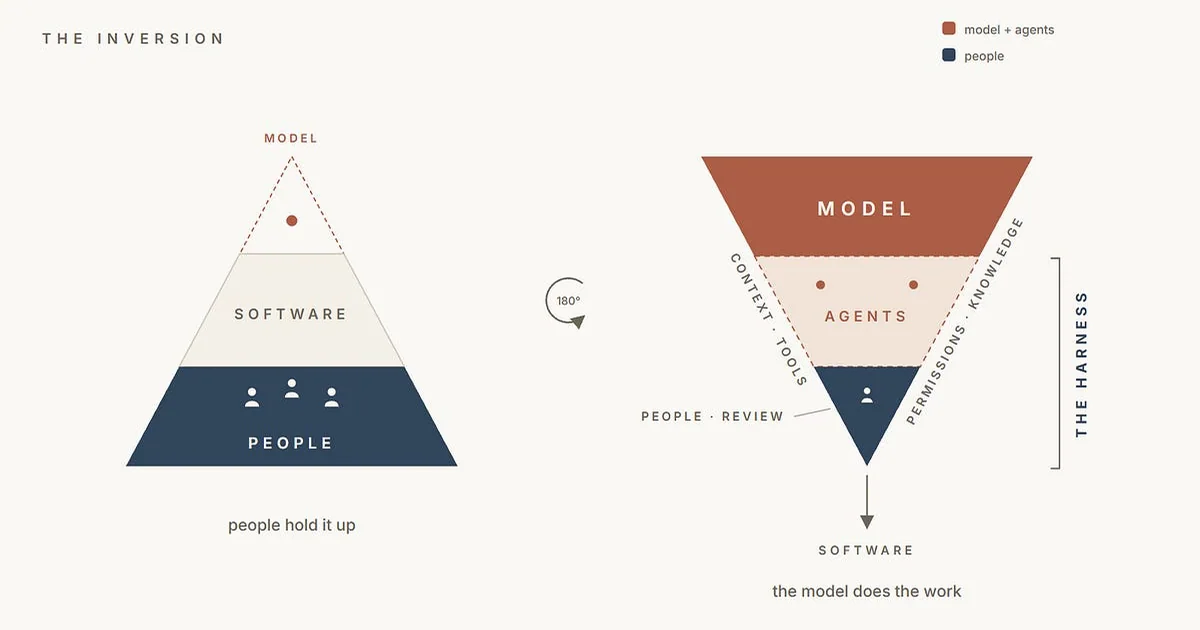
    The article argues SaaS firms will become harnesses around models; the discussion is split, with critics calling software factories unproven and risky and supporters seeing harness quality as the next moat.

    Discussion summary

    Whether software factories and proactive agent harnesses are viable for serious software work, or an untested model that creates operational risk.

    56 points42 comments
  • Models & Products

    Show HN: Made an open-source Lego AI generator

    ldraw-nova shows agents can generate LDraw LEGO models via Python generators and iterative rendering, but the README says only expensive high-end models produce large correct results, and assembly reasoning remains a key

    Discussion summary

    A commenter asks whether the system can generate functional mechanisms using LEGO Technic parts, probing the range of models it can produce.

    42 points27 comments
  • Infrastructure & Efficiency

    Our Project Suncatcher prototype satellite is in orbit

    Google's Suncatcher prototype is in orbit and will test TPUs in space, but the supplied discussion doubts space-based ML compute can beat terrestrial latency and density, and suspects other motives.

    Discussion summary

    Commenters argue that placing compute in space for Earth users increases latency and reduces density, and that ML compute in space is likely impractical.

    27 points24 comments
  • Agents & Coding

    One month coding with GLM 5.3 Flash

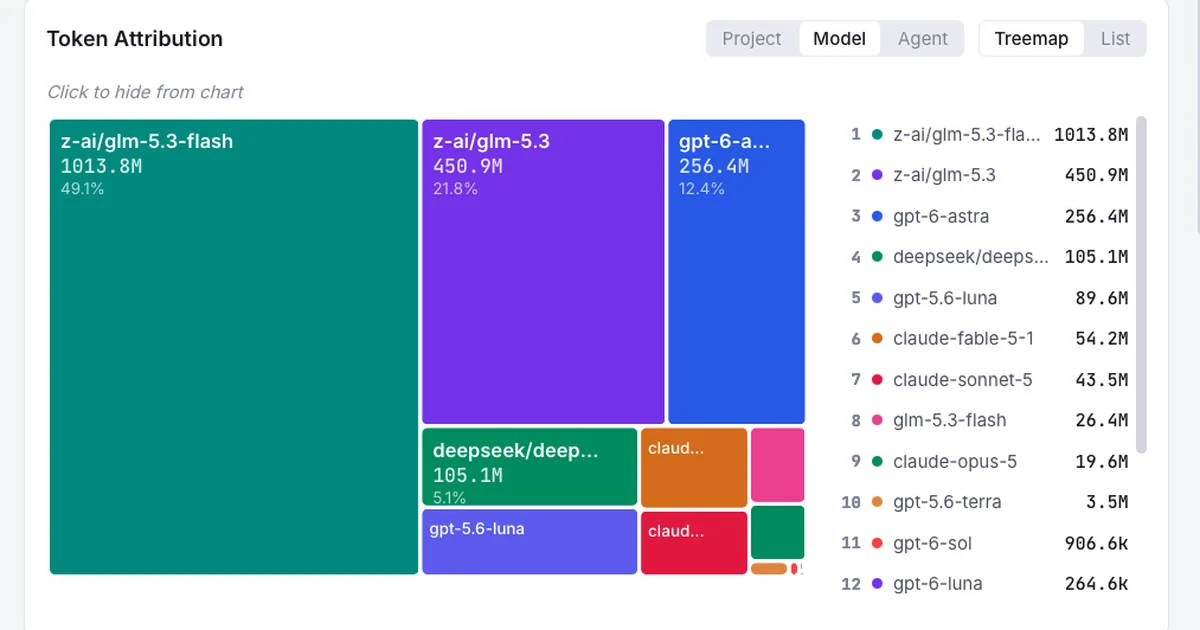
    A month on GLM 5.3 Flash showed cheap flash-tier coding is viable, but only with multi-model planning/review and careful cost controls; the single-model challenge itself failed.

    Discussion summary

    Commenters compare the reported energy and dollar costs of inference, noting that energy is a small fraction of total cost, that $150 for 450M tokens seems excessive, and that household-scale energy additions are…

    39 points28 comments
  • Research & Evaluation

    With most information hidden, the game Stratego had stumped AI until now

    Ataraxos beat the top Stratego player with 16 GPUs, but the supplied discussion questions the novelty versus DeepMind's 2022 bot and whether static-game success generalizes to dynamic settings.

    Discussion summary

    Commenters recall DeepMind's 2022 Stratego effort and mention recent RL bots for StarCraft and Advance Wars, placing Ataraxos in a line of prior or alternative game-AI systems.

    84 points22 comments
  • Models & Products

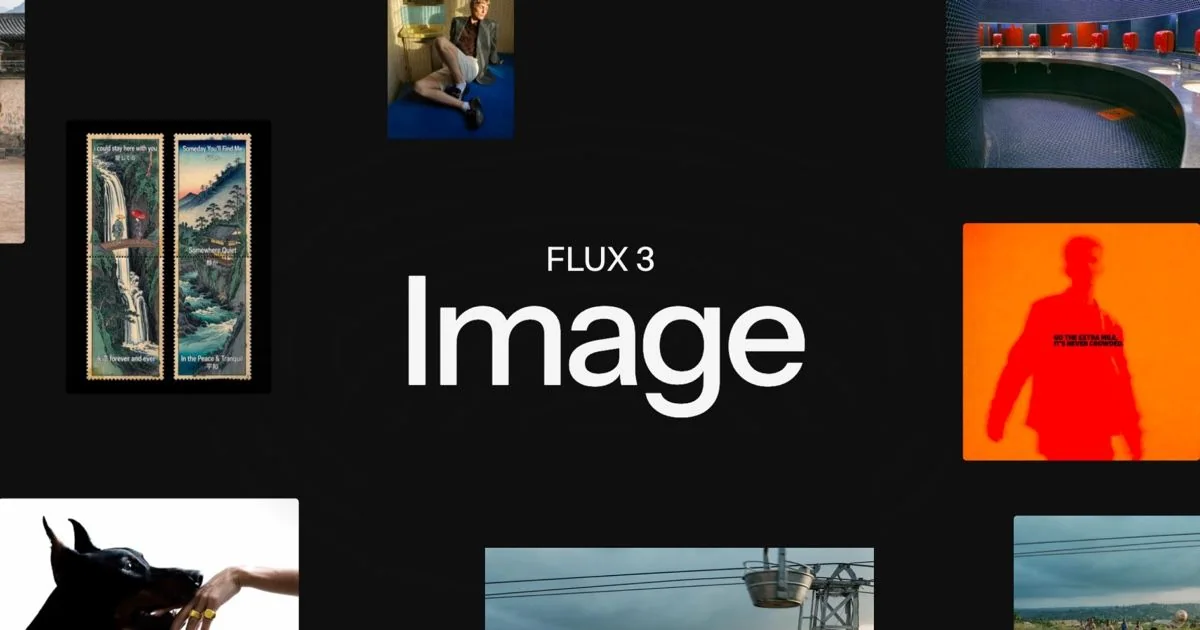
    FLUX 3 Image

    FLUX 3 Image promises bounding-box layout control and native 4K edits, but the supplied discussion questions page clarity and whether open weights will follow.

    Discussion summary

    Commenters question whether image models can generate accurate frame-by-frame sprite sequences; one argues the task is inherently temporal and better suited to video models, while another cites a Qwen example.

    175 points34 comments
  • Models & Products

    Show HN: Giving Opus 5.5 a simulated paint canvas

    Stillwet.art demonstrates LLMs painting by writing code against a simulated oil-paint canvas, but the small discussion sample is mixed: curiosity about the method, enthusiasm for robot painting, and concern for artists.

    Discussion summary

    Commenters question whether brushstroke painting comes from direct training data, suspect RL environments for recreating paintings with code, and note the code includes a look tool for inspecting the canvas at provider…

    102 points32 comments
  • Agents & Coding

    The Four Horsemen of Agentic Coding

    The essay argues agentic coding brings slop, alienation, deskilling and team fallout; commenters corroborate team and review harms but dispute that slop is inherent or unsolved.

    Discussion summary

    Frontier-model code quality is disputed; one commenter says reading is unnecessary, while another reports slop-induced review fatigue and a critical AI-missed bug.

    65 points34 comments