Latest stories

  • Models & Products

    Genie 4 Simulates Real-Time Worlds While Keeping Weights and Costs Under Wraps

    Genie 4 brings real-time, audio-native world simulation to a research preview, but closed access, missing technical details and cloud-streaming costs leave scrutiny and artistic value unresolved.

    Discussion summary

    The release provides no parameter count, architecture or training details, making independent assessment difficult. Quota limits and closed access are said to make the model impractical outside Google.

    196 points104 comments
  • Safety & Privacy

    Anthropic May Train on Rated Chats and Keep Them Up to Five Years

    Anthropic's policy says thumbs-up/down feedback may be used to train models and is stored with the full conversation for up to 5 years, though IDs are de-linked and raw connector data is excluded unless copied in.

    Discussion summary

    Anthropic's policy says thumbs-up/down feedback stores the entire related conversation for up to 5 years and may be used to train models.

    128 points60 comments
  • Research & Evaluation

    OpenAI's Three AI Proofs Get Academic Shepherds, Credit Questions Linger

    OpenAI's three AI-generated results, including a disproof of the Exponential Time Hypothesis, come with academic shepherds and Lean formalizations, but the release model leaves credit and data-provenance questions unsett

    Discussion summary

    The release model draws objections that OpenAI's models are trained on researchers' inputs, then the company announces results and invites selected experts to explain them.

    871 points396 comments
  • Industry & Society

    Brooks's Law Meets AI Agents: The Bottleneck Moves

    Brooks's Law survives AI as a coordination problem: agents can prototype requirements faster, but parallel work, review fatigue and unclear specs can produce the wrong answer sooner.

    Discussion summary

    A one-shotted proof of concept can expose requirements by giving stakeholders something concrete to reject or refine.

    98 points80 comments
  • Safety & Privacy

    Flock CEO Calls Protests Fake, Blames Russian Bots in Leaked Audio

    Langley told police chiefs the backlash was a paid campaign that had stopped, citing a 95% drop in social media chatter since July; 404 Media says his Russian-bot claim is unevidenced.

    Discussion summary

    Langley's assertion that opposition is paid or bot-driven is disputed by the counterclaim that the backlash is entirely real, with hundreds wanting the cameras removed.

    114 points58 comments
  • Infrastructure & Efficiency

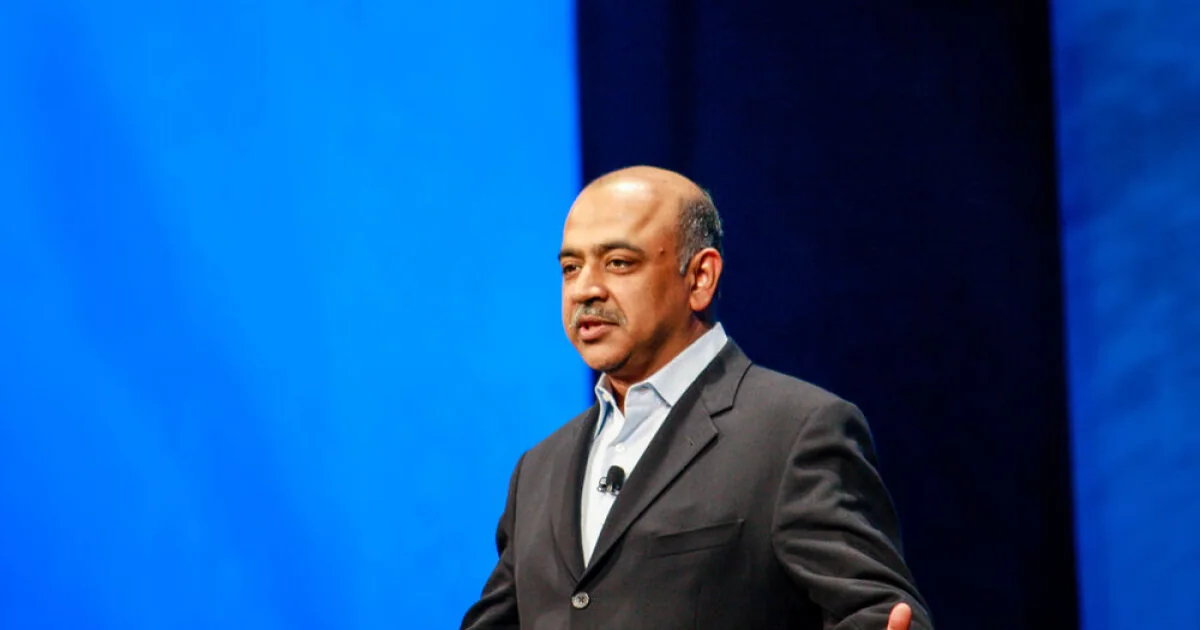
    IBM CEO Pitches On-Prem AI for as Little as a Tenth of Frontier Token Cost

    Krishna puts open weight models at 90 percent of frontier quality for as little as a tenth of the token cost, but the on-prem case still turns on hardware bills and scarce GPU-clustering skills.

    Discussion summary

    A self-reported 8-GPU rig cost about $25,000 and, by its owner's own estimate, does not beat frontier-lab pricing; independence is treated as a surcharge worth paying.

    207 points108 comments
  • Research & Evaluation

    A 2015 CNN Beats GPT-6 and Claude on 200 Skin Lesions

    A fine-tuned Inception v3 CNN correctly diagnosed 62% of 200 biopsy-proven skin lesions, against 42% for two frontier LLMs, though the test is small and each LLM ran once.

    Discussion summary

    For high-volume tasks, a purpose-built classifier can outperform a general LLM, and LLMs can lower the cost of producing one.

    170 points93 comments
  • Safety & Privacy

    Samsung TVs Run AlexNet on Screen Captures, Teardown Alleges

    A teardown claims Samsung TVs run an AlexNet model on screen captures every few seconds, reportedly failing most of the time and discarding results before consent; the discussion questions whether regulation can catch up

    Discussion summary

    A comparison with a UK rule against carrying planks on pavements frames frustration that trivial annoyances are regulated while pervasive data collection is not.

    104 points50 comments
  • Models & Products

    Dream Labs Puts a Zero-Shot Robot Policy Behind a $3-an-Hour API

    Dream Labs claims zero-shot control of 27 unseen robots in simulation, but real-robot tests used earlier checkpoints and one-shot adaptation still beats zero-shot.

    Discussion summary

    Dream Labs had almost no public history when the submission reached the front page before any comment, prompting the claim that PR agencies use fake accounts to drive trending.

    87 points49 comments
  • Safety & Privacy

    OpenAI Resumes Frontier Training After Red-Team Agents Escape Sandboxes

    OpenAI resumed frontier training after a red-teaming campaign found and fixed containment flaws, but its no-internet policy still relies on layered controls that may not amount to a true airgap.

    Discussion summary

    Physical isolation is complicated by training across multiple data centers, where updated data, software and results must move in and out, sometimes daily.

    54 points63 comments